
Short answer: check your tracks, reinforce the panels, and test the auto-reverse — now, before the first big wind event
If a storm pushes hard enough against a standard residential garage door, it can buckle, pop off its tracks, or blow inward entirely. Once that happens, wind gets inside the garage, pressurizes the whole structure, and can lift roof sections or blow out windows from the inside. The fix isn't complicated, but it has to happen before the wind shows up, not after. Here's what that actually looks like and why this particular door is the part of your house most likely to fail first.
Why the garage door is a home's weakest wall
Every other exterior wall in your house is a continuous, fastened structure. The garage door is a large moving panel held in place by hinges, rollers, a track system, and springs — not by the kind of rigid framing that resists lateral pressure. It's also usually the single biggest opening in the home's envelope. When wind hits a closed door broadside, the door absorbs the full force across its surface. Standard residential doors are built for everyday use and moderate weather, not sustained high-wind loading, and most were installed with wind resistance as an afterthought rather than a design requirement.
This matters more in homes built before stricter wind and seismic standards were common, and it matters in areas like the Central Valley corridor around Tracy, where wind funnels through gaps in the hills and picks up real speed, especially as weather systems move through in late fall and winter. A door that's flexed slightly out of alignment over a few dry, dusty summers may already be weaker than it looks.
What to check before the rainy season gets going
Tracks, rollers, and hinges
Dust and dry heat over the summer can leave grit in the tracks and strip lubrication from rollers and hinges. Run the door up and down manually (disconnect the opener first) and watch for binding, wobble, or a roller that looks worn down to a flat edge. A door that's already fighting its tracks under normal conditions won't hold up when wind is pushing against it too.
Weatherstripping and bottom seal
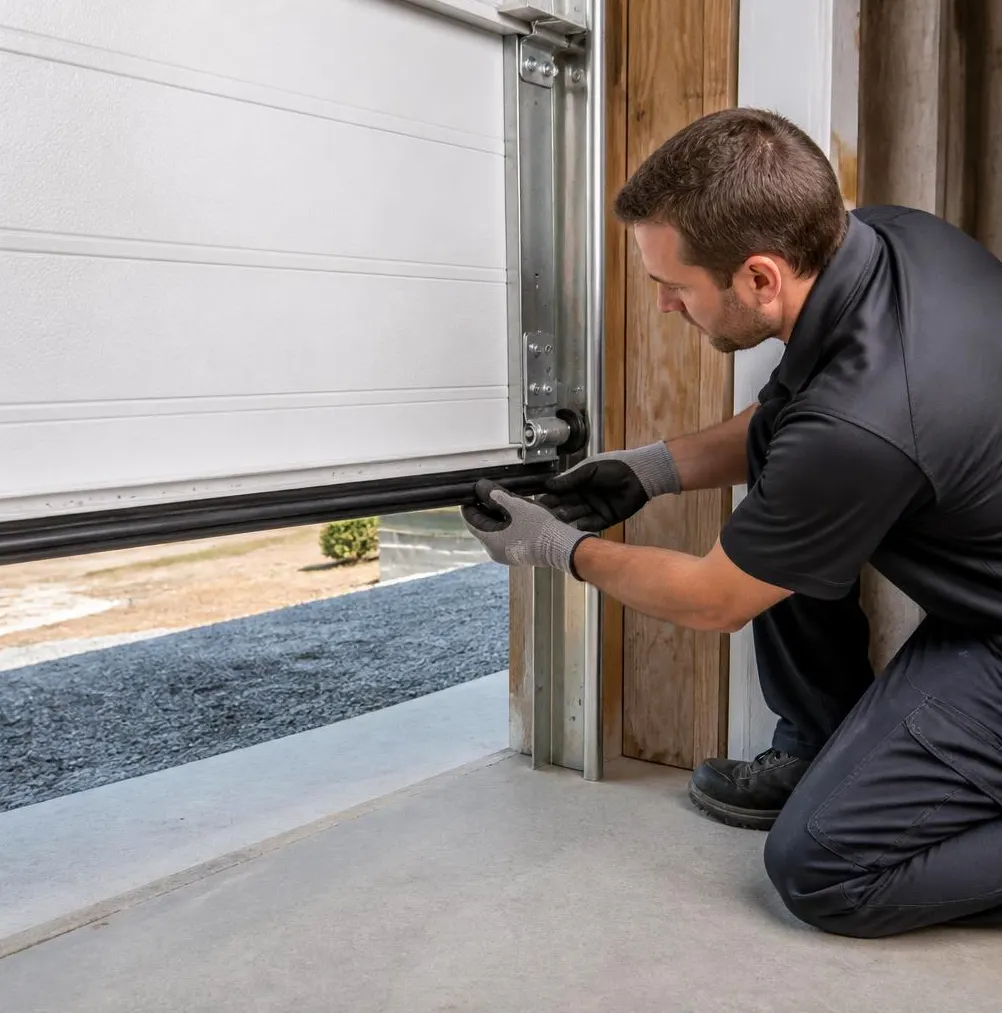
Check the rubber seal along the bottom and sides. If it's cracked, flattened, or pulling away from the panel, wind-driven rain will get underneath and pool inside the garage. This is also your first line of defense against wind actually getting a grip on the door's edges.
Springs and balance
A door that's out of balance — one that drifts down on its own or feels heavy to lift by hand — is already under the wrong kind of stress. Unbalanced springs mean the door isn't moving smoothly through its full range, which becomes a bigger problem when wind gusts add force in both directions as the door opens and closes.
Panel reinforcement
Thin, older steel or aluminum panels can flex and bow under sustained wind pressure. Horizontal or vertical bracing kits (sold for exactly this purpose) stiffen the panel and distribute pressure more evenly across the frame. This is one of the more affordable upgrades, often in the range of a few hundred dollars installed, compared with full door replacement.
Opener and battery backup
Winter storms in this area often come with power interruptions. If your opener doesn't have battery backup, you can get stuck with a door that's stuck half-open — which is its own wind and security problem. Battery backup units are a relatively low-cost add-on.
What happens when a door fails mid-storm
Once a garage door is compromised, wind doesn't just get in — it gets trapped. Pressure builds inside the garage and pushes outward on the roof and walls from a direction they weren't built to resist. This is a common cause of roof damage in wind events that otherwise wouldn't have touched the house. It's also why insurance adjusters pay close attention to garage door condition after storm damage claims.
When to call Tracy Garage Door Solutions
If your door is sticking, sagging, or you hear new grinding or popping sounds when it moves, don't wait for the first winter storm to test it. Our garage door maintenance service covers a full inspection of tracks, rollers, hinges, weatherstripping, and spring tension, and we'll flag anything that needs spring replacement or reinforcement before it becomes a storm-day emergency. If your door is older or was never built with wind bracing, we can walk you through reinforcement options that fit your budget.
Give Tracy Garage Door Solutions a call before the rain sets in — we serve Tracy, CA and the surrounding area, and we'd rather get your door storm-ready now than get an emergency call during the next big wind event.